
On this page
- Why Is the First $100,000 So Difficult?
- The Real Reason Wealth Can Grow Faster: Compounding
- Why $100,000 Is Such an Important Milestone
- The Math: How the First $100,000 Changes Your Journey
- Why Your Second $100,000 May Come Faster
- What Actually Changes After You Reach $100,000?
- How to Build Your First $100,000: Nine Practical Steps
- How Much Should You Save Each Month to Reach $100,000?
- Is $100,000 in Savings the Same as $100,000 Invested?
- The Hidden Challenge: Lifestyle Inflation
- What If You Reach $100,000 Later in Life?
- What Comes After Your First $100,000?
- Five Common Mistakes That Can Slow Wealth Building
- Your First 30 Days Toward $100,000
- FAQ
- Final Thoughts
The first $100,000 can feel painfully slow.
You save money every month. You watch your spending, contribute to your retirement account, and try to make sensible financial decisions. Yet your investment balance barely seems to move.
Then something interesting happens.
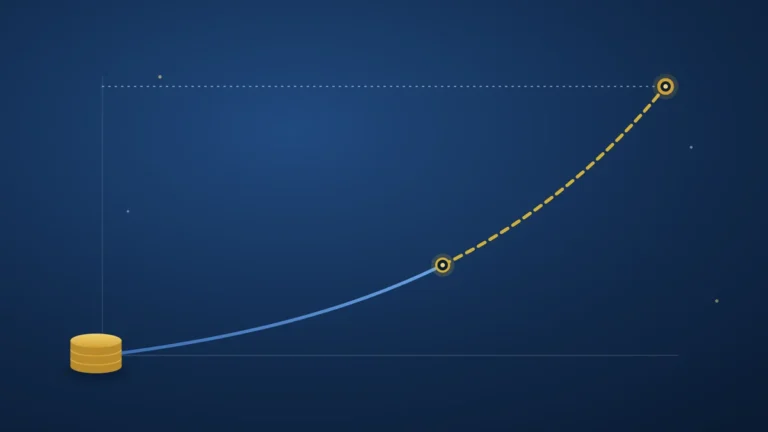
As your savings grow, the investment returns on those savings can become large enough to make a noticeable difference. Eventually, your portfolio may generate more in a good year than you could afford to contribute from your salary.
That’s when many people begin to understand why experienced investors place so much emphasis on building their initial capital.
Charlie Munger, the late vice chairman of Berkshire Hathaway and Warren Buffett’s longtime business partner, famously emphasized how difficult accumulating the first $100,000 can be.
His observation has become a popular talking point in personal finance communities.
But is there really something special about reaching $100,000?
Does building wealth become easier after that milestone? And if you’re starting with little savings, what can you do to make progress without sacrificing everything you enjoy today?
The answers are more practical than you might expect.
Why Is the First $100,000 So Difficult?
Think about what happens when you begin investing with almost nothing.
Suppose you have $2,000 invested and earn a hypothetical 6% annual return.
That produces $120 in investment growth over one year, assuming the return is earned without additional contributions and ignoring taxes and fees.
It’s a useful beginning, but $120 probably won’t change your financial situation.
Now imagine your portfolio has grown to $100,000.
The same 6% return would represent $6,000 in annual growth.
At $500,000, that return would equal $30,000.
The percentage hasn’t changed. The size of the portfolio has.
That’s the mathematical reason a larger investment balance can generate more substantial dollar gains.
Of course, a 6% return is only an illustration. Investments don’t earn the same return every year, and negative returns would produce larger dollar losses on larger portfolios.
Still, the underlying principle is worth understanding.
When you’re starting out, most of your progress usually comes from the money you contribute.
As your investments grow, potential investment returns begin to play a larger role.
In the Beginning, You’re Doing Most of the Work
Imagine putting $500 into an investment account every month.
During your first year, you’ll contribute $6,000.
Even if your investments perform reasonably well, most of the account balance will consist of money you’ve personally saved.
Your income is doing the heavy lifting.
You have to earn the money, pay your bills, and deliberately set part of your paycheck aside.
This continues for years, particularly if you’re working with a modest income.
It’s one reason early wealth building can feel frustrating.
You may be making excellent financial decisions while seeing little immediate reward.
But those contributions are accumulating, and the assets you buy can potentially generate returns of their own.
That brings us to one of the most important concepts in personal finance.
The Real Reason Wealth Can Grow Faster: Compounding
Compound growth occurs when returns remain invested and can contribute to future growth.
With a savings account, this may happen as interest is earned on both your original deposit and previously credited interest.
With investments, the process is less predictable. Dividends, interest, and increases in asset values may contribute to portfolio growth, and reinvested earnings can participate in future gains or losses.
The SEC’s Investor.gov website explains how relatively small savings amounts can accumulate over time through compounding.
The important variable is time.
A portfolio that remains invested for decades has more opportunities to benefit from reinvested returns than money invested for only a few months.
A Simple Example of Compound Growth
Suppose you invest $10,000 and earn a hypothetical 6% annually, compounded once per year.
Here’s what happens if the return remains constant and you add no further money.
| Year | Portfolio value |
|---|---|
| Starting balance | $10,000 |
| 5 | $13,382 |
| 10 | $17,908 |
| 15 | $23,966 |
| 20 | $32,071 |
| 25 | $42,919 |
| 30 | $57,435 |
After 30 years, the original $10,000 has grown to approximately $57,435.
You haven’t contributed another dollar.
In this hypothetical scenario, the growth comes entirely from compounding.
Now imagine starting with $100,000 instead.
Under the same assumptions, the portfolio would grow to approximately $574,349 after 30 years.
The larger starting balance produces a much larger dollar outcome, even though the assumed percentage return is identical.
Real investment returns vary, losses occur, and taxes, fees, and inflation can reduce the value of future results. These examples demonstrate the mathematics rather than predict investment performance.
The table above uses annual compounding (returns credited once a year). The interactive tool below uses monthly compounding, which credits returns twelve times a year and so produces slightly higher figures for the same inputs. Adjust the controls to explore how a starting balance, monthly contributions, a growth rate, and time work together.
How Your First $100,000 Could Grow
Explore how an initial investment, monthly contributions, and hypothetical growth rates can affect long-term portfolio value.
Illustrative projections only. Returns are hypothetical and are not guaranteed. Actual investment performance fluctuates, and taxes, fees, inflation, and market losses can materially affect results. The model assumes a constant annualized return credited monthly and does not simulate market volatility.
Why $100,000 Is Such an Important Milestone
There’s no magical switch that activates when an investment account reaches six figures.
A portfolio worth $99,000 follows the same mathematical principles as one worth $101,000.
Still, $100,000 is a useful psychological and financial milestone.
It represents a balance large enough for moderate percentage changes to produce noticeable dollar amounts.
Consider the following illustration.
| Investment portfolio | Hypothetical 6% annual gain |
|---|---|
| $10,000 | $600 |
| $25,000 | $1,500 |
| $50,000 | $3,000 |
| $100,000 | $6,000 |
| $250,000 | $15,000 |
| $500,000 | $30,000 |
| $1,000,000 | $60,000 |
A $100,000 portfolio experiencing a 6% gain would increase by $6,000.
That’s equivalent to someone contributing $500 per month for an entire year.
For a person who has spent years carefully setting money aside, seeing the portfolio produce a gain comparable to a year’s contributions can feel significant.
It demonstrates how investment growth could eventually supplement the money you’re adding from your paycheck.
But the reverse matters too.
A 20% market decline would reduce a $100,000 portfolio by $20,000. Reaching a larger balance makes both gains and losses more substantial in dollar terms.
The discipline that helped you accumulate money remains important after the milestone.
The Math: How the First $100,000 Changes Your Wealth-Building Journey
Let’s compare two investors.
Both contribute $500 per month.
Both earn an assumed annual return of 6%, compounded monthly, with contributions made at the end of each month.
Investor A begins with nothing.
Investor B already has $100,000 invested.
Neither changes the monthly contribution amount.
Here’s how their investments could grow.
| Years invested | Investor A: Starts at $0 | Investor B: Starts at $100,000 |
|---|---|---|
| 5 | $34,885 | $169,770 |
| 10 | $81,940 | $263,879 |
| 15 | $145,409 | $390,819 |
| 20 | $231,020 | $562,041 |
| 25 | $346,497 | $792,994 |
| 30 | $502,258 | $1,104,515 |
The difference is striking.
After 30 years, Investor A has approximately $502,000.
Investor B has approximately $1.10 million.
Both followed the same contribution schedule and earned the same hypothetical return.
The difference came from the additional $100,000 that Investor B had invested at the beginning.
That starting capital had three decades to participate in compound growth.
This illustrates why building an initial investment base can be so valuable.
However, it’s important to understand what the comparison does and doesn’t show.
Investor B began with significantly more money. We haven’t accounted for how long it took to accumulate that original $100,000.
These are also nominal figures that exclude taxes, fees, inflation, and market volatility.
The lesson isn’t that everyone needs to reach $100,000 immediately.
It’s that money invested earlier has more time to work.
Why Your Second $100,000 May Come Faster Than Your First
Here’s another way to look at the numbers.
Suppose you start with $0, invest $500 monthly, and earn a hypothetical 6% annual return compounded monthly.
Under these assumptions, reaching your first $100,000 would take approximately 11.6 years.
Once your balance reaches $100,000, the time required to accumulate the next $100,000 could be much shorter if the same contributions and return assumptions continued.
Why?
Because you’re no longer relying exclusively on the $500 you contribute each month.
Your existing portfolio is also potentially growing.
At $100,000, a hypothetical 6% annual return represents approximately $6,000 in first-year growth without additional contributions.
Your monthly contributions add another $6,000 over the year.
While returns won’t arrive smoothly or predictably, the potential contribution from investment growth has become meaningful relative to your own saving effort.
At $200,000, that same hypothetical percentage return represents $12,000 annually before additional contributions.
At $300,000, it represents $18,000.
The larger the invested balance, the more significant a given percentage return becomes.
Important: The second $100,000 is not guaranteed to arrive faster. A market downturn, investment losses, withdrawals, or changes in your savings rate can delay progress.
But under a steady positive-return mathematical model, a growing portfolio can shorten the time required to reach successive dollar milestones.
What Actually Changes After You Reach $100,000?
The mathematics of compounding explains part of the story.
There are also behavioral changes that can make wealth accumulation more manageable.
1. You Have an Established Saving Habit
Someone who has accumulated $100,000 through regular saving may have already developed useful financial routines.
Perhaps you contribute to your retirement account every payday.
You may have learned to separate essential expenses from discretionary spending.
You might have stopped relying on credit cards to fund purchases you can’t afford.
These habits can become increasingly automatic.
Instead of making a new financial decision every month, you follow a system you’ve already developed.
Of course, reaching $100,000 through an inheritance, property sale, or other windfall doesn’t necessarily mean those habits are in place.
The method used to build the balance matters.
2. Your Investments Can Contribute More to Growth
When your portfolio is small, your personal contributions dominate the results.
As your investment balance increases, potential returns can become a more substantial source of growth.
This is especially noticeable during strong market years.
A diversified investment portfolio worth $300,000 could experience a $30,000 gain during a year with a 10% return.
That may exceed what the investor contributes from employment income during the same period.
A negative 10% return, however, would create a $30,000 loss.
Investment growth becomes more financially meaningful, but it never becomes risk-free.
3. You May Have Greater Financial Flexibility
A larger pool of savings and investments can provide more options.
You might have sufficient liquid savings to handle a major expense without borrowing.
You may be better positioned to negotiate a career move, fund additional education, or cope with a temporary reduction in income.
But a $100,000 retirement account with withdrawal restrictions is different from $100,000 in accessible savings.
The type of account, tax consequences, and liquidity all influence how much financial flexibility you actually have.
4. You’re Better Able to See Long-Term Progress
During the first few years, investment contributions can feel disconnected from financial freedom.
Over time, the numbers become more tangible.
A portfolio that could cover six months of essential expenses might eventually grow to cover several years.
That progression can make a distant goal feel more achievable.
For many people, this changes the way they think about money.
Every contribution becomes part of a longer-term plan rather than an isolated sacrifice.
How to Build Your First $100,000: Nine Practical Steps
Understanding compounding is useful.
Putting it into practice is where the work begins.
Here are nine steps that can help you build a stronger financial foundation and pursue your first major investment milestone.
Step 1: Know Your Starting Point
Before choosing an investment amount, understand your current financial situation.
Calculate your net worth by subtracting your debts from your assets.
Then examine your monthly income and expenses.
Look at how much you currently save, how much debt you’re carrying, and whether you have money set aside for emergencies.
You may discover that you can comfortably invest $300 monthly.
Or you may realize that expensive debt and irregular bills need attention first.
Either finding is useful.
A realistic starting point is more valuable than an ambitious plan that falls apart after two months.
Step 2: Build Emergency Savings
It’s difficult to invest consistently when every unexpected expense forces you to borrow money or sell assets.
An emergency fund provides a financial buffer.
A common target is three to six months of essential living expenses, with a larger reserve sometimes appropriate for households with variable income, dependents, or uncertain employment.
Start smaller if necessary.
Even a modest emergency fund can help manage an unexpected bill.
Keep the money accessible, generally in an appropriately insured savings account rather than a volatile investment.
This helps protect the long-term investments you’re trying to accumulate.
Step 3: Pay Attention to High-Interest Debt
Suppose you’re carrying a credit card balance with a 24% APR.
Investing while maintaining expensive revolving debt can make it difficult to improve your overall financial position.
Paying down that balance avoids future interest charges, while stock market returns remain uncertain.
Prioritize high-interest debt based on your rates, repayment terms, and financial circumstances. If you are deciding where to start, compare the debt snowball and debt avalanche methods.
You don’t necessarily need to pay off every mortgage or student loan before investing.
But expensive consumer debt deserves serious attention.
Step 4: Choose a Monthly Investment Amount You Can Sustain
Start with a figure that works within your actual budget.
It might be $100, $250, $500, or more.
The important thing is consistency.
A contribution you can maintain through ordinary financial ups and downs is usually more useful than an aggressive amount that regularly forces you to withdraw savings.
If you receive a raise, consider directing some of the additional income toward investments.
Small increases can accumulate over time.
Step 5: Use Appropriate Tax-Advantaged Accounts
For U.S. investors, retirement accounts can be valuable tools for long-term wealth accumulation.
If your employer offers a 401(k) with matching contributions, review how the matching program works.
Traditional and Roth IRAs may offer additional tax advantages, depending on your income and eligibility.
A traditional account and a Roth account have different tax treatments, so the appropriate choice depends on your circumstances. The same trade-off applies to a Roth versus traditional 401(k).
Remember that retirement accounts can have restrictions on early withdrawals.
If you’re also saving for a near-term goal, you may need other types of accounts.
Step 6: Invest With Diversification in Mind
Building wealth doesn’t require predicting which individual stock will deliver the highest return.
Many long-term investors use diversified mutual funds or exchange-traded funds that provide exposure to numerous companies or asset classes.
Diversification can reduce the risk associated with relying on a single holding.
It cannot guarantee gains or protect against all losses.
Your investment allocation should reflect when you expect to need the money and how much volatility you can tolerate.
Money required for a home purchase next year, for example, generally deserves different treatment from money intended for retirement in 30 years.
Step 7: Keep Investment Costs Under Control
Fees may seem small, but they reduce the money available to compound.
According to the U.S. Securities and Exchange Commission, ongoing investment fees can materially affect long-term portfolio outcomes.
The SEC provides an illustration in which different annual fees cause a $100,000 investment portfolio to finish with substantially different values over 20 years.
Understand your fund expense ratios, advisory fees, account charges, and transaction costs.
Lower costs don’t guarantee better investment performance.
But unnecessary fees are expenses you can often control.
Step 8: Increase Your Earning Power
For many households, cutting spending has limits.
You still need housing, food, transportation, healthcare, and other essentials.
Increasing income can create additional room for saving.
That might involve negotiating a raise, changing jobs, improving professional qualifications, taking on suitable freelance work, or building a modest side business.
Not every opportunity will be worthwhile.
Consider the time, expenses, taxes, and uncertainty involved before pursuing additional income.
If you do earn more, decide how much of that increase will go toward savings before expanding your lifestyle.
Step 9: Stay Consistent Without Obsessing Over the Balance
Checking your portfolio constantly can make ordinary market movements feel like major financial events.
If your goal is decades away, day-to-day changes may provide little useful information.
Instead, schedule periodic reviews.
Check whether you’re contributing regularly, whether your investments still match your goals, and whether your expenses or personal circumstances have changed.
Rebalance when appropriate.
Increase savings as your finances allow.
And remember that a temporary decline doesn’t automatically mean your long-term plan has failed.
How Much Should You Save Each Month to Reach $100,000?
The amount depends on your timeline, starting balance, and investment returns.
The following table illustrates how different monthly contributions could accumulate under a hypothetical 6% annual return compounded monthly.
All scenarios begin with $0 and assume contributions are made at the end of each month.
| Monthly investment | After 5 years | After 10 years | After 15 years |
|---|---|---|---|
| $250 | $17,443 | $40,970 | $72,705 |
| $500 | $34,885 | $81,940 | $145,409 |
| $750 | $52,328 | $122,910 | $218,114 |
| $1,000 | $69,770 | $163,879 | $290,819 |
These examples demonstrate how the amount you contribute influences the outcome.
Investing $250 monthly is a worthwhile beginning, even if it doesn’t produce a six-figure balance in five or ten years.
A larger monthly contribution could shorten the timeline, but the appropriate amount depends on your household finances.
The table does not account for taxes, investment expenses, inflation, or market volatility, and the assumed return is not guaranteed.
Want to explore your own savings timeline? Use The Financial Compass’s free Compound Interest Calculator to compare different starting balances, monthly contributions, and hypothetical returns. Try several scenarios rather than relying on a single optimistic assumption.
Savings Milestone Calculator
See how long it could take to reach a savings goal, and when you might pass each milestone along the way.
Milestones on the way
Illustrative estimate only. It assumes a constant return credited monthly and ignores taxes, fees, inflation, and market volatility, so real timelines will vary. Money you expect to need soon is usually better held in low-risk savings than invested. This is educational information, not individualized financial advice.
Is $100,000 in Savings the Same as $100,000 Invested?
Not necessarily.
Both represent valuable financial assets, but they serve different purposes.
$100,000 in a Savings Account
Money in a savings account can offer liquidity and principal protection within applicable deposit insurance limits.
It may be appropriate for emergency reserves, a home down payment, or other shorter-term financial needs.
However, savings account interest rates change, and inflation can reduce purchasing power over time.
$100,000 in Investments
Money invested in stocks, bonds, mutual funds, or ETFs may have greater long-term growth potential, depending on the portfolio.
It also faces market risk.
Your $100,000 balance could temporarily fall to $80,000 or lower during a severe downturn.
For a long-term wealth-building goal, investments may be suitable. But the appropriate allocation depends on your timeline, risk tolerance, and need for access to the money.
$100,000 in Net Worth
Net worth includes assets minus liabilities.
Someone might have $100,000 in net worth because of retirement investments, home equity, and cash savings.
That is a meaningful financial achievement.
Still, home equity and retirement funds aren’t necessarily available to spend without selling assets, borrowing, paying taxes, or meeting withdrawal rules.
For the compounding examples in this article, we’re referring specifically to invested financial assets.
The Hidden Challenge: Lifestyle Inflation
Imagine earning $65,000 annually and managing to save $500 per month.
A few years later, your salary increases to $85,000.
That should create an opportunity to build wealth more quickly.
But perhaps you purchase a more expensive car, move into a larger home, or gradually increase discretionary spending.
Before long, you may find you’re still saving the same $500 monthly.
Your income increased. Your investment contributions didn’t.
This is lifestyle inflation.
We explore this trap in depth, including how to handle a raise without giving it all back, in our guide to avoiding lifestyle inflation.
There’s nothing inherently wrong with improving your lifestyle as your earnings grow.
The problem comes when every raise immediately creates a new recurring expense.
A practical approach is to decide in advance how much of a future pay increase you’ll save. Lifting your savings rate as your income grows is one of the most reliable ways to speed up wealth building.
If your take-home income rises by $600 monthly, for example, you might direct $300 toward savings or investments and use the remainder for current needs.
That way, you can enjoy some benefits of higher earnings while improving your long-term financial position.
What If You Reach $100,000 Later in Life?
A common misconception is that wealth building only works if you start investing in your twenties.
Starting early provides more time for potential compounding, but meaningful progress is possible at older ages as well.
Someone beginning at 45 may have 20 years before a planned retirement at 65.
Someone beginning at 55 may have a shorter accumulation period but could have higher earnings or fewer financial obligations than earlier in life.
The strategy should fit the remaining timeline.
A person approaching retirement may need to place greater emphasis on risk management, liquidity, and avoiding losses that could disrupt near-term plans. Our guide to how much money you need to retire can help you set a target.
Don’t take excessive investment risks simply because you feel behind.
Focus on what you can control: expenses, contribution rates, investment costs, diversification, and realistic retirement expectations.
Your first $100,000 is a milestone, not an age-based deadline.
What Comes After Your First $100,000?
Reaching six figures can be exciting.
But what you do next matters.
The habits that helped build the first $100,000 may continue to be useful as your financial circumstances evolve.
Keep Contributing
A larger portfolio doesn’t eliminate the value of additional savings.
Continued contributions can increase the amount invested and reduce your dependence on market returns alone.
If your income increases, consider whether you can raise your investment contributions.
Review Your Investment Allocation
As your assets grow, it becomes increasingly important to understand what you own.
A portfolio heavily concentrated in one company or industry may expose you to unnecessary risk.
Check your diversification, fees, investment objectives, and time horizon.
Define What the Money Is For
Is your portfolio intended to fund retirement?
Could it help you achieve financial independence or reduce your working hours? For some people, that eventually leads to the FIRE movement and the idea of making work optional earlier than usual.
Are you saving for your children’s education or another long-term family goal?
The answers influence how the money should be invested and when it might be needed.
You may find our guide, How to Become Financially Independent: A Step-by-Step Guide, helpful in turning accumulated wealth into a longer-term financial plan.
Protect Your Financial Foundation
Continue maintaining emergency savings and appropriate insurance.
Review debt obligations, beneficiary designations, and other financial responsibilities.
A larger investment portfolio is valuable, but it doesn’t replace sound household financial planning.
Five Common Mistakes That Can Slow Wealth Building
1. Waiting Until You Can Invest a Large Amount
You don’t need $10,000 to begin.
A modest, consistent contribution can help establish a useful habit and give your money time to participate in potential growth.
2. Chasing High Returns to Reach $100,000 Faster
Speculative investments can produce large gains, but they can also create substantial losses.
Using leverage, pursuing unreliable trading signals, or concentrating savings in highly volatile assets can derail long-term plans.
Avoid treating wealth building as a race against someone else’s investment account.
3. Ignoring Investment Fees
Ongoing costs reduce returns and the capital available for future growth.
Review fund expense ratios and other investment charges before choosing a product or service.
4. Keeping Every Dollar Invested Without a Cash Buffer
Unexpected expenses happen.
Without emergency savings, you may need to sell investments during a downturn or rely on expensive credit.
A liquid financial reserve can help you maintain a longer-term investment strategy.
5. Assuming the Next $100,000 Is Guaranteed
A larger portfolio can magnify gains.
It can magnify losses as well.
Markets don’t provide a reliable annual paycheck, and a $100,000 portfolio may finish a difficult year worth significantly less.
Keep expectations realistic.
Your First 30 Days Toward $100,000
You can begin pursuing your first $100,000 without making dramatic changes overnight.
Here’s a practical four-week starting plan.
Week 1: Get your financial picture clear. Calculate net worth, list debts and interest rates, review recent spending, and determine how much cash you have available for emergencies.
Week 2: Set an achievable investment target. Choose a monthly savings or investment amount that fits your budget. Establish a first milestone, whether that’s $1,000, $5,000, or $10,000.
Week 3: Put your system in place. Review your workplace retirement plan, examine available investment accounts, and automate contributions where appropriate.
Week 4: Look for opportunities to improve. Identify one recurring expense to reduce, review potential ways to increase earnings, and schedule a future financial check-in.
Your first month won’t make you financially independent.
But you’ll have a clearer plan and a repeatable process.
And that’s how many long-term financial goals begin.
FAQ
Why Do People Say the First $100,000 Is the Hardest?
When you're beginning with little invested capital, most of your progress comes from saving part of your income. As your portfolio grows, potential investment returns can contribute larger dollar amounts to your balance. The initial milestone can also be difficult because you're developing financial habits while managing everyday expenses.
Is $100,000 Considered Wealthy?
That depends on your age, location, household obligations, debts, and financial goals. Having $100,000 invested can represent substantial progress, but it may not provide enough income to support retirement or long-term financial independence. The value of the milestone lies partly in the financial foundation it represents.
How Long Does It Take to Save $100,000?
The timeline depends on how much you save, your starting balance, and whether the money is invested. For example, saving $1,000 monthly without earning interest would take 100 months, or eight years and four months, to reach $100,000. Investment growth could shorten that period, while losses could extend it.
Can You Turn $100,000 Into $1 Million?
It is mathematically possible for $100,000 to grow to $1 million through long-term compounding, with or without additional contributions. At a hypothetical 7% annual return compounded once per year, $100,000 would take approximately 34 years to reach $1 million without additional contributions. Actual results depend on investment performance, taxes, fees, and withdrawals. There is no guarantee a portfolio will achieve that outcome.
Should You Keep $100,000 in Cash or Invest It?
The appropriate choice depends on why you need the money. Funds intended for emergencies or near-term spending may belong in accessible, lower-risk accounts. Money allocated toward goals decades away may be suitable for diversified investments, depending on your ability and willingness to accept risk. You can also divide funds among different purposes.
Is the First $100,000 Harder Than the First Million?
For many savers, building initial capital feels more difficult because investment returns contribute relatively little at the beginning. Once a substantial portfolio exists, percentage gains can represent larger dollar amounts. However, becoming a millionaire still requires significant resources, a workable plan, and tolerance for financial uncertainty.
Does Compound Growth Work if You Invest Only $100 Per Month?
Yes. The mathematical principles of compounding apply to small investments as well as large ones. The resulting dollar amounts will be smaller, but contributions and reinvested returns can accumulate over time. Consistency and an appropriate investment horizon matter.
What Is More Important: Saving More or Earning Higher Investment Returns?
For many people starting with small portfolios, increasing contributions can have a powerful and relatively controllable effect. Investment returns are uncertain. You can decide how much to contribute, within the limits of your budget. You cannot reliably choose what the market will earn next year. Focus on sustainable savings, diversified investing, sensible costs, and realistic assumptions rather than trying to predict unusually high returns.
Final Thoughts: The First $100,000 Builds More Than Your Investment Balance
There’s something encouraging about the mathematics of building wealth.
At first, progress can seem almost invisible.
You put away $100 here and $300 there. Some months are easier than others. A car repair or medical bill may force you to slow down.
Meanwhile, your portfolio grows in small increments.
But over time, those contributions can accumulate into something meaningful.
And as the invested balance increases, potential compound growth can begin contributing more substantially to the result.
That’s why the first $100,000 has become such a memorable milestone.
Still, the real achievement goes beyond reaching a six-figure number.
You’ve learned to manage expenses, make room for savings, think beyond your next paycheck, and maintain a plan through changing circumstances.
Those skills can support every financial milestone that follows.
If $100,000 feels impossibly far away today, begin with a smaller target.
Your first $1,000 matters. So does your first $10,000. And your first $25,000.
The aim is to establish a process you can continue, adjust, and build upon over time.
Building your first $100,000 can be an important financial milestone. To see how it fits into your bigger financial picture, read our guide, How to Become Financially Independent: A Step-by-Step Guide. You can also explore our free Compound Interest Calculator to compare how different contributions, timeframes, and hypothetical returns could shape your results, remembering that investment returns are never guaranteed.
Related Guides
- How to Become Financially Independent: A Step-by-Step Guide
- What Is the FIRE Movement? A Beginner’s Guide
- How Compound Interest Works: Why Time Matters More Than You Think
- Your Savings Rate and Financial Independence: Why the Percentage Matters
- How to Calculate Your Net Worth and What the Number Actually Tells You
Sources and further reading
This article is for general financial education and does not constitute personalized financial, investment, tax, or legal advice. All investment calculations, including the interactive tool, are hypothetical and exclude taxes, fees, and inflation unless otherwise stated. Investments can lose value, and past performance does not guarantee future results. Consider consulting a qualified financial professional when making decisions based on your circumstances.
Related articles
Coast FIRE Explained: When Can You Stop Saving for Retirement?
Learn how Coast FIRE works, how to calculate your Coast FIRE number, and when your investments may be able to grow toward…

Lifestyle Inflation: Why Higher Income Doesn’t Always Build Wealth
Earning more but saving less? Learn how lifestyle inflation quietly eats up pay raises and discover practical ways to build wealth without…

What Is the FIRE Movement? A Beginner’s Guide
FIRE means Financial Independence, Retire Early. How it works, the five types (Lean, Fat, Coast, Barista, Traditional), your FIRE number, and the…