
Position Sizing Explained: How Much Should You Risk on a Trade?
How to size a trade from your risk limit: account risk, the position-sizing formula, stop distance, volatility, leverage, and total open risk.
The latest articles and guides from The Financial Compass.
How to size a trade from your risk limit: account risk, the position-sizing formula, stop distance, volatility, leverage, and total open risk.

How traders control downside risk: risk per trade, position sizing, stop orders, leverage, daily loss limits, and total portfolio exposure.

Inflation is a broad rise in prices that erodes what your money can buy. How it is measured, and how it affects your savings, debt, investing, and retirement.

Your savings rate is the share of your income you save and invest. Here is why that percentage shapes how fast, and how big, your path to financial independence is.

A 401(k) lets you save for retirement through work. How contributions, the employer match, vesting, taxes, rollovers, and withdrawals actually work.

Dollar-cost averaging means investing a fixed amount on a regular schedule, whatever the market is doing. Here is how it works, where it helps, and its limits.

An index fund tracks a market index, giving you exposure to many securities in a single holding. Here is how index funds work, what they cost, and how to choose one.
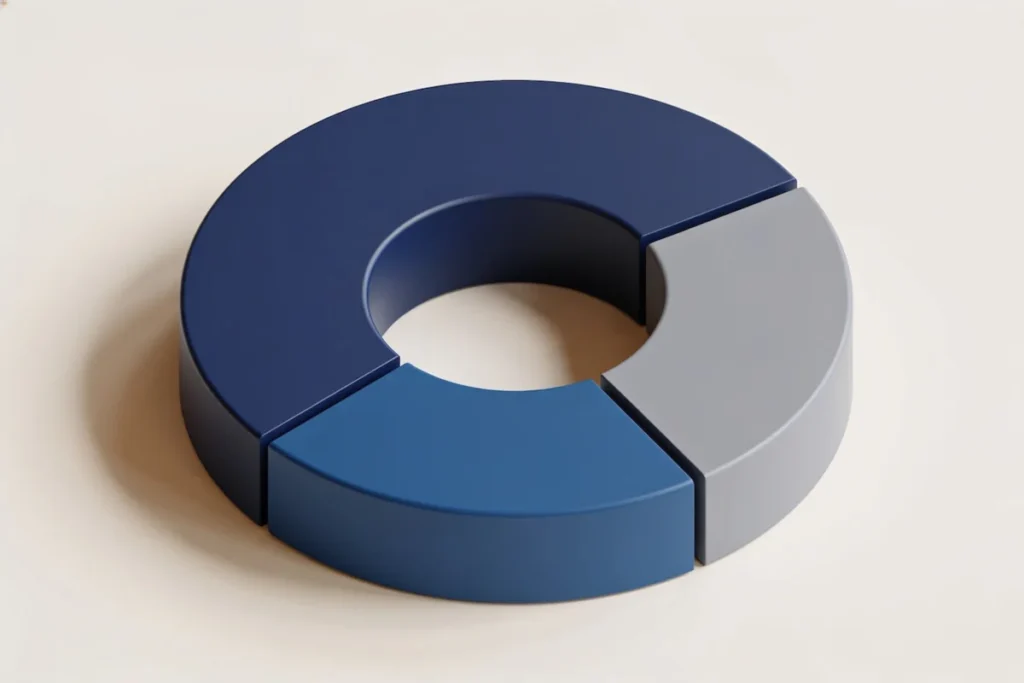
Asset allocation is how you divide your money across stocks, bonds, and cash. Here is how to choose a mix that fits your goals, timeframe, and tolerance for risk.

Buying a stock gives you ownership in one company. An ETF or mutual fund gives you a share of a portfolio. Here is how the three differ in diversification, trading, fees, and taxes.

The 50/30/20 rule splits take-home pay into needs, wants, and savings. Learn how the framework works, what counts in each bucket, and when the ratios may not fit your life.